Besek, ceramics, and a city where craft is still ordinary. Yogyakarta is an arts city. But not in the way a Western city might brand itself. Here, craft isn't a revival or a movement. It's just how things are made.
A workshop, not a factory
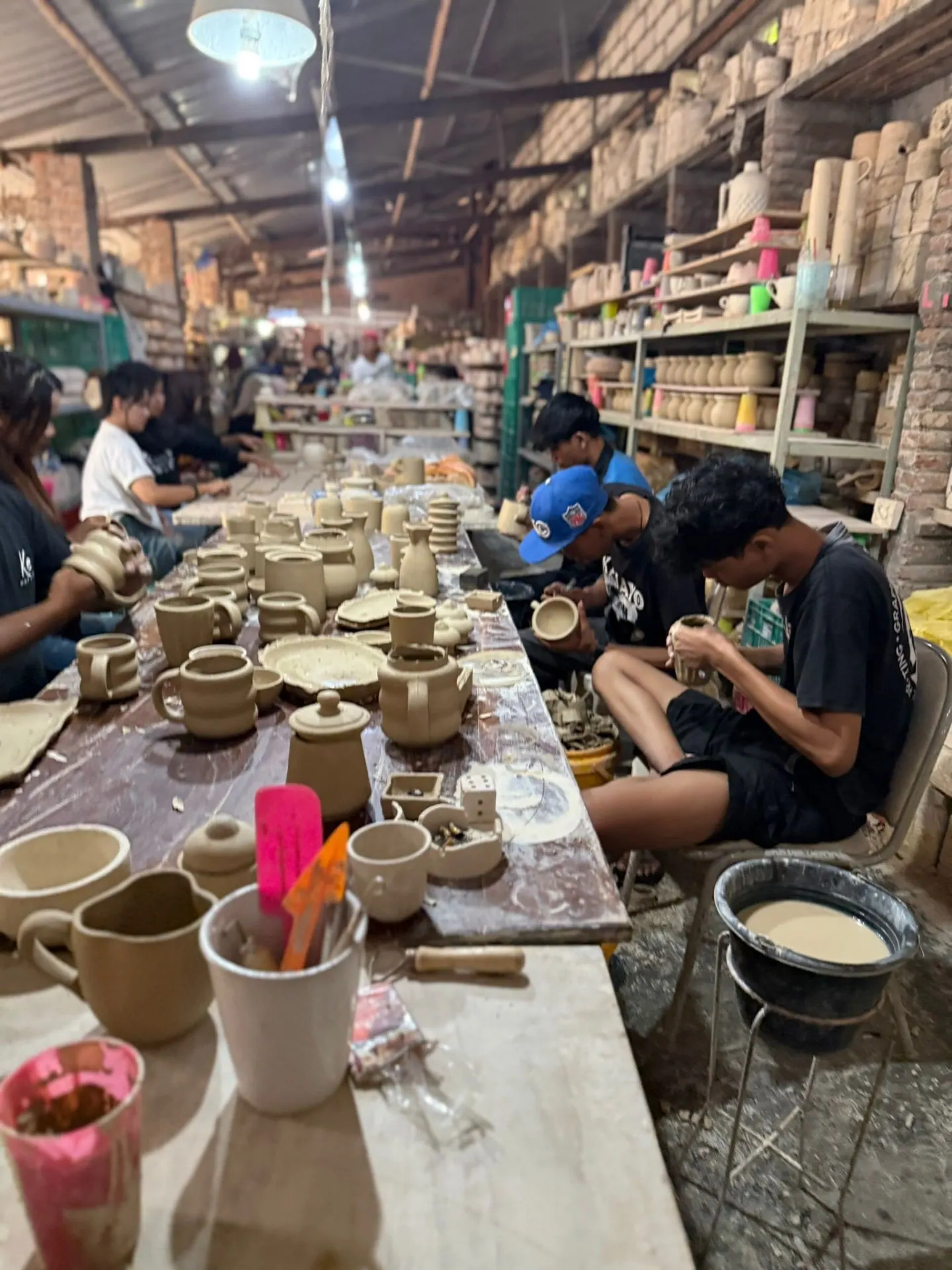
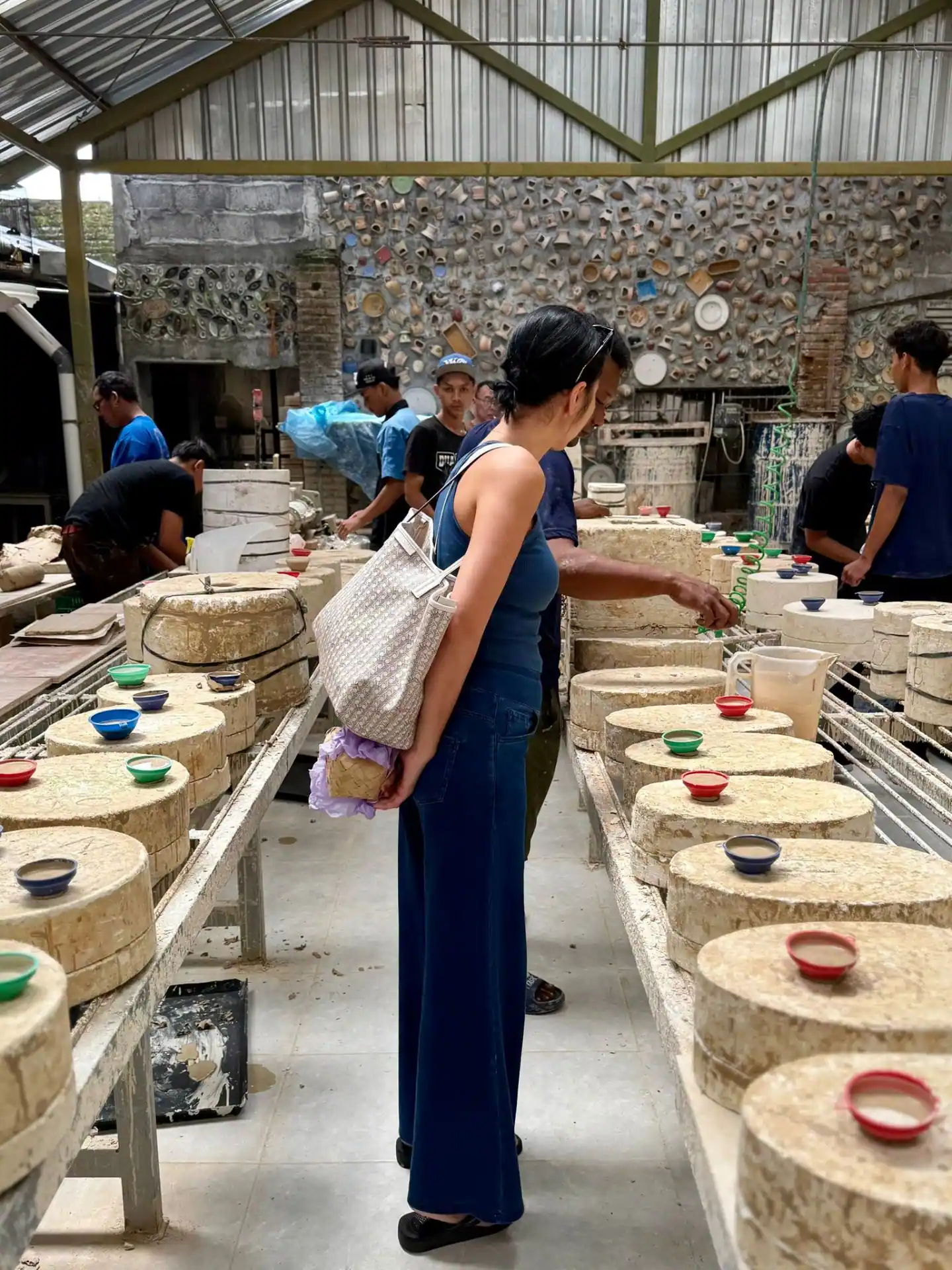
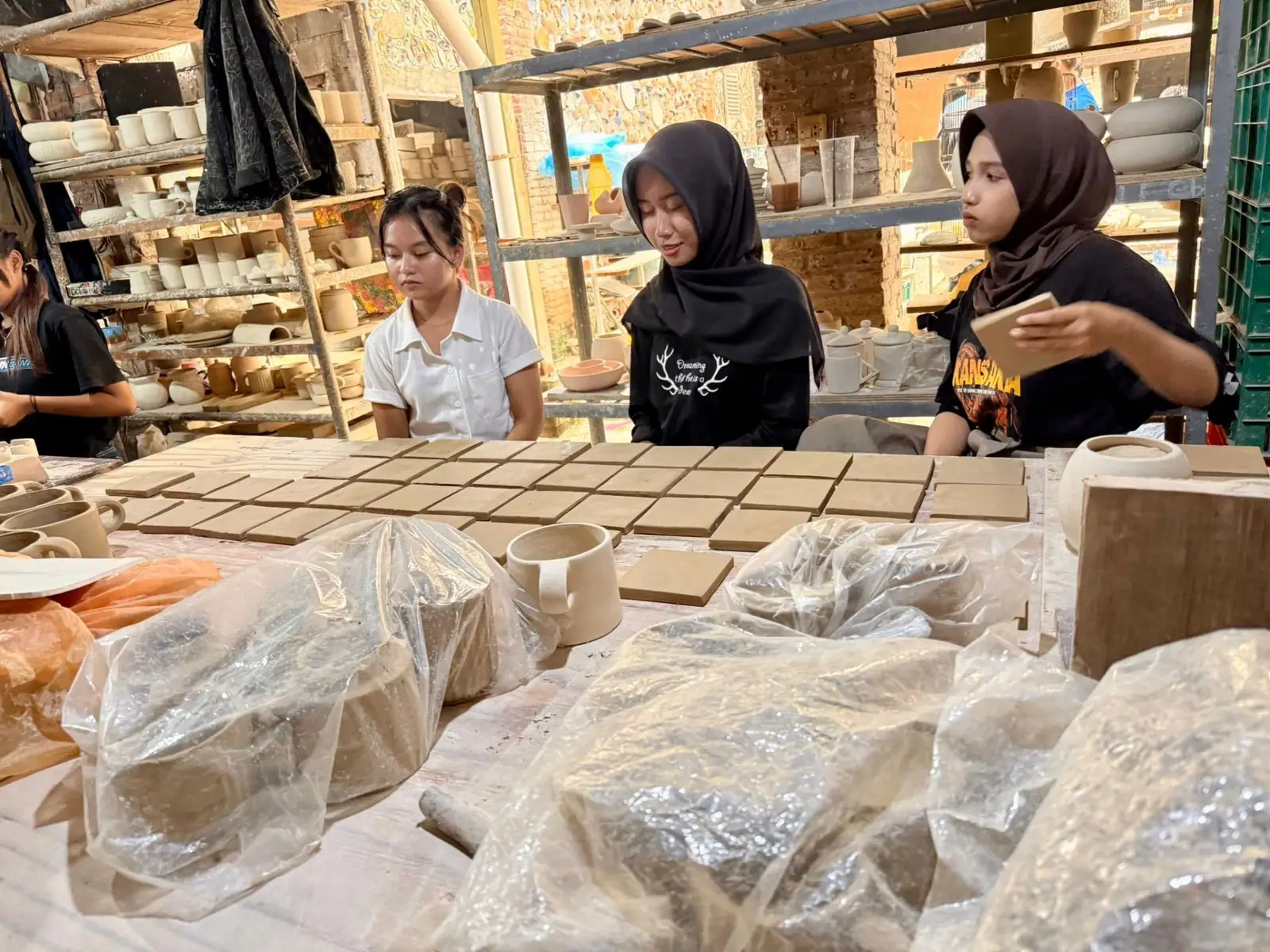
We visited a ceramics workshop on the outskirts of the city. The space was open-air, with corrugated roofing and walls embedded with broken pottery — a mosaic of decades of production. Young workers sat at long tables, shaping clay with their hands, no machines in sight.
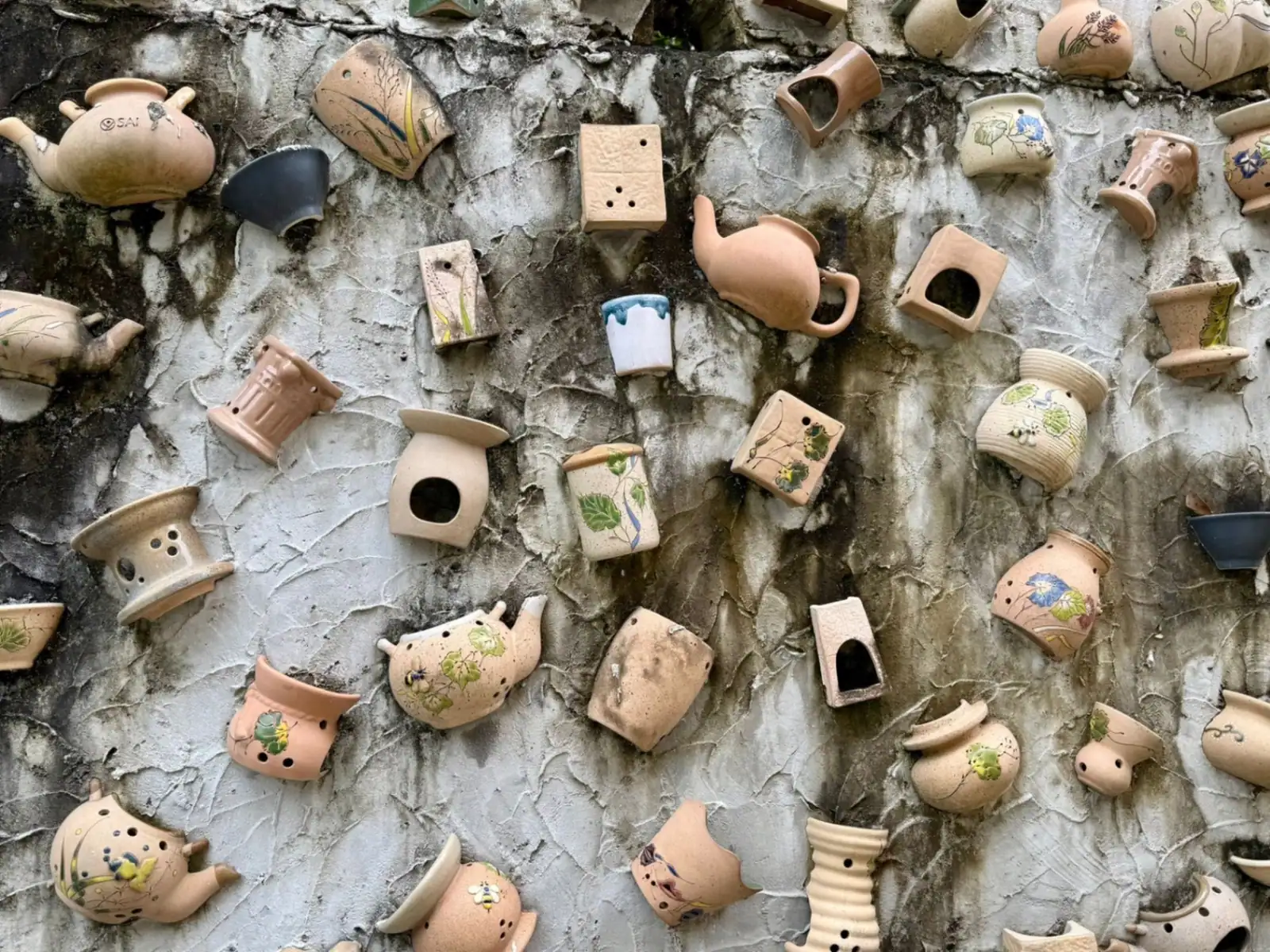
The wall behind them was extraordinary — hundreds of ceramic pieces embedded directly into the concrete. Teapots, cups, vases, birdhouses. Some painted with flowers, others left plain. It wasn't decoration. It was archive.
Getting our hands dirty
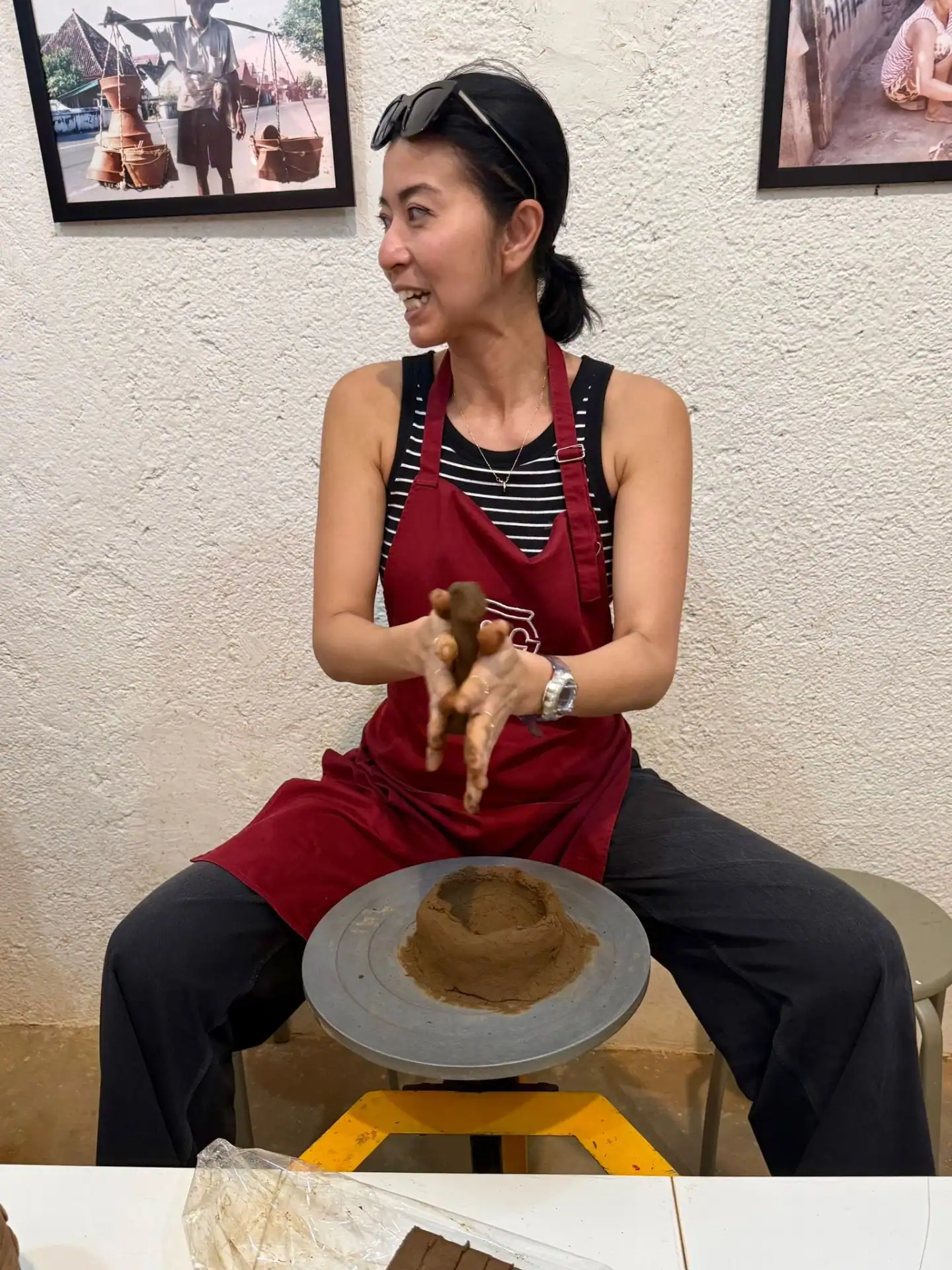
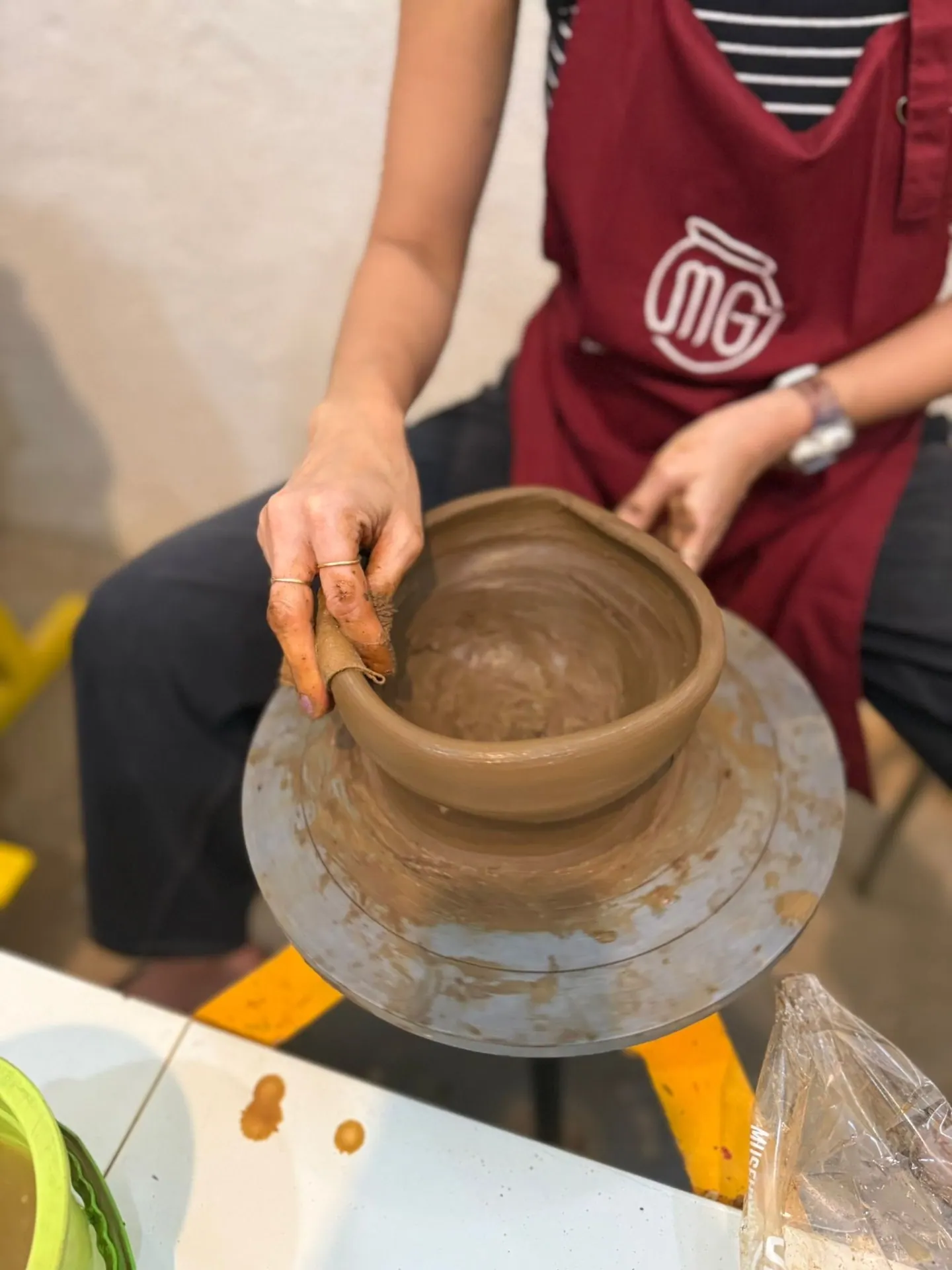
We tried it ourselves. Sat down at a wheel with clay in hand. The simplicity is deceptive — what looks effortless in the artisans' hands becomes immediately humbling when you try it. The clay has a mind of its own.
From kiln to shelf
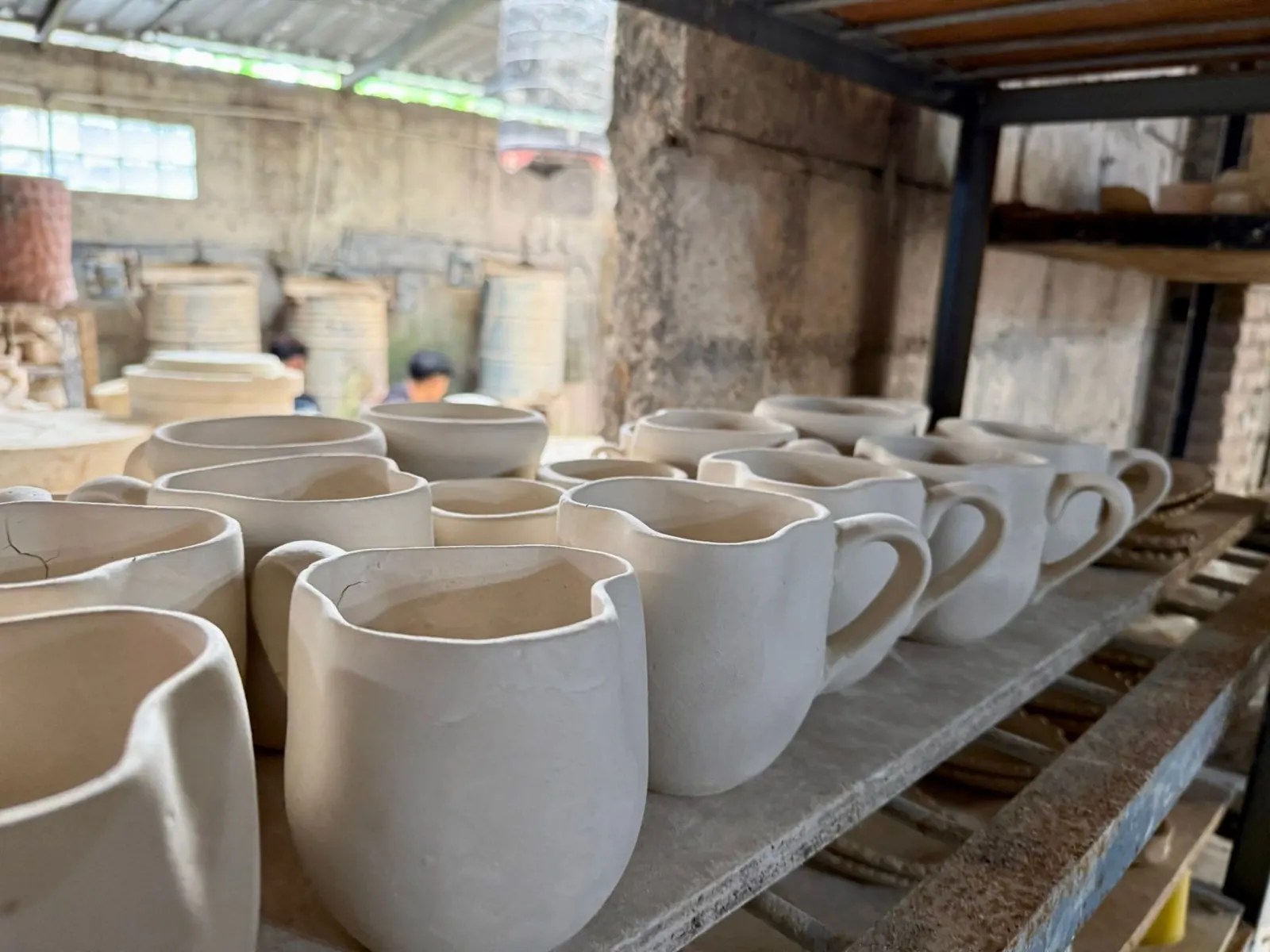
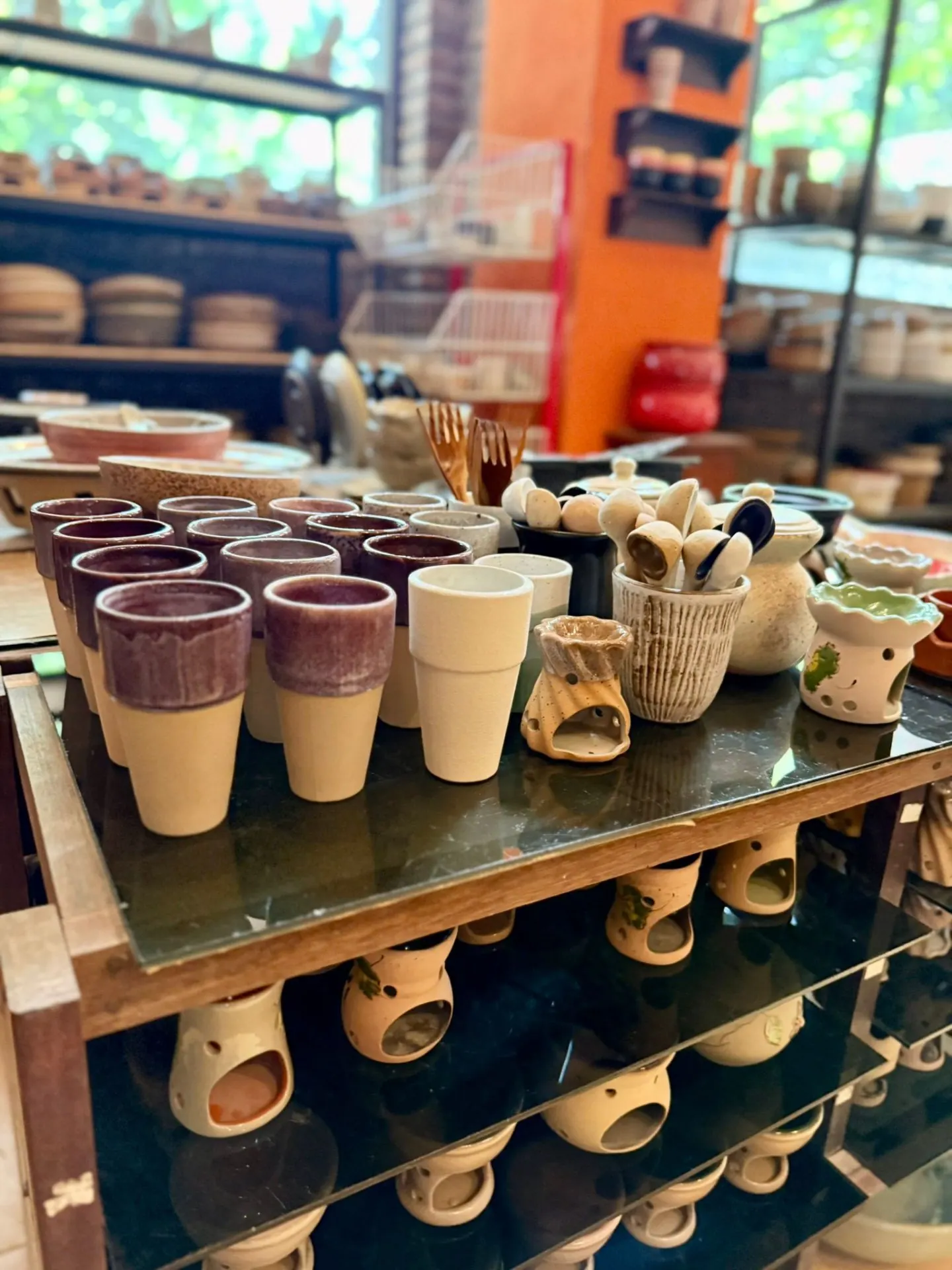
Rows of freshly formed mugs lined the drying shelves — pale, unfired, waiting their turn in the kiln. Nearby, the finished pieces sat glazed and colourful, ready for market. The whole lifecycle was visible in one room.
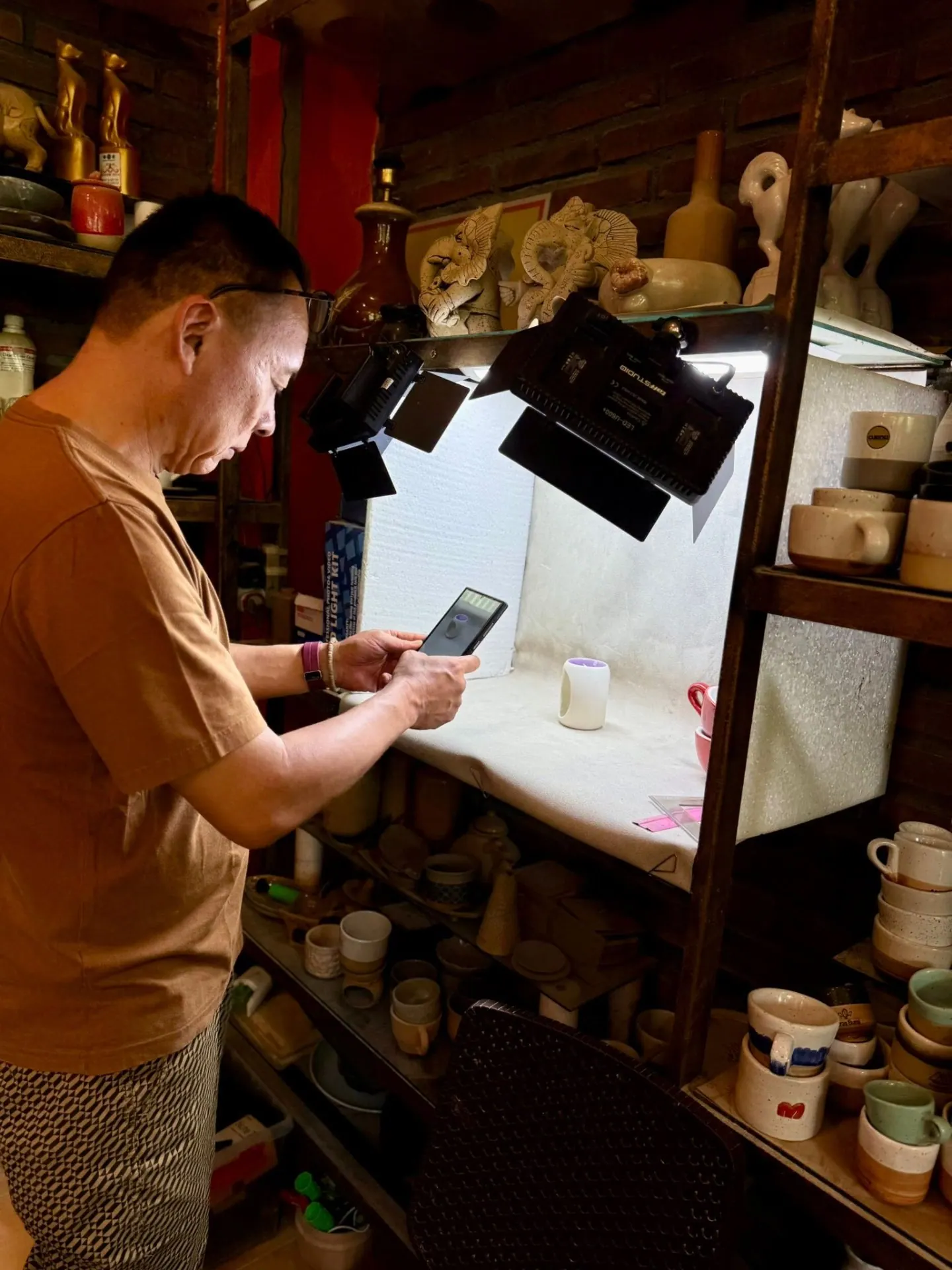
In one corner, a man photographed his pieces under studio lights — documenting each one for an online shop. The old and the new, side by side.
Yogyakarta reminded us that craft doesn't need a brand or a story to justify itself. It simply exists — in the hands, in the routine, in the ordinary magic of making something from nothing.