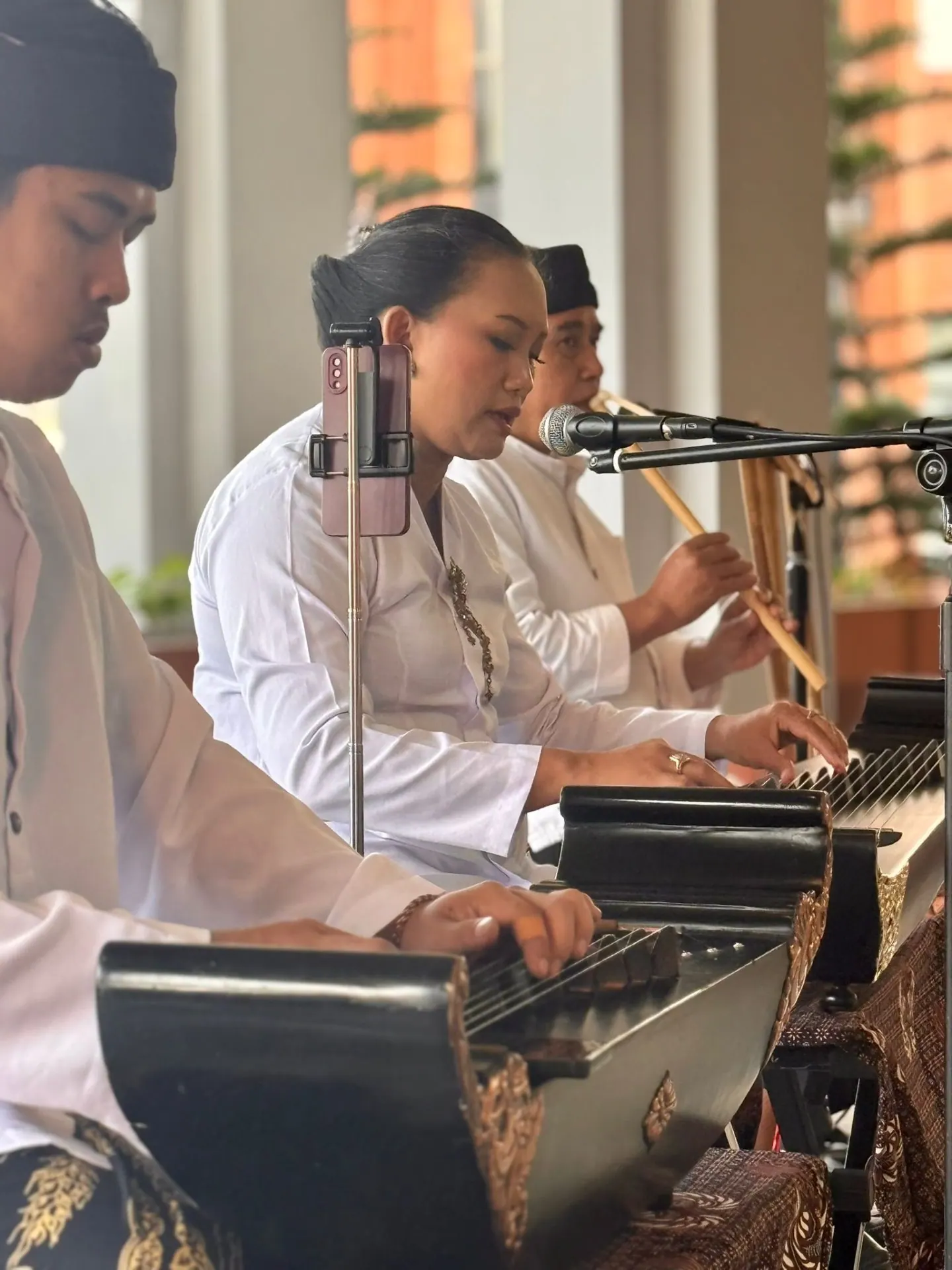
In West Java — the Sunda region — there's a kind of music that doesn't sound like the gamelan of Central Java. It's softer. More melancholy. And it stays with you.
The kecapi is a small boat-shaped zither, plucked with both hands. The suling is a bamboo flute, breathy and intimate. And then there is the sinden — the female vocalist whose voice seems to glide between the notes rather than land on them. Together they create a sound that feels like water, like dusk, like a room lit only by candles.
I grew up hearing gamelan at ceremonies — the bronze percussion, the precise interlocking rhythms. But Sundanese music was different. It was the music my mother played on quiet afternoons, the music that made a house feel still. It wasn't for performance. It was for being inside.
When we began shaping the MANDI7 ritual, we kept returning to this question: what does the bath sound like? Not the water itself, but the mood around it. The music that lets you lower your shoulders and stay a little longer. Sundanese music kept answering that question.
So we made a playlist. Nothing complicated — just kecapi, suling, and sinden, the instruments of the region, played softly while the bath is prepared. It isn't background noise. It's part of the transition. The same way the flowers change the water, the music changes the room.
The form changes, but the meaning is the same: water, flowers, sound and intention together bring healing, transition, and blessing. That is the spirit of Sunda we wanted to carry with us.